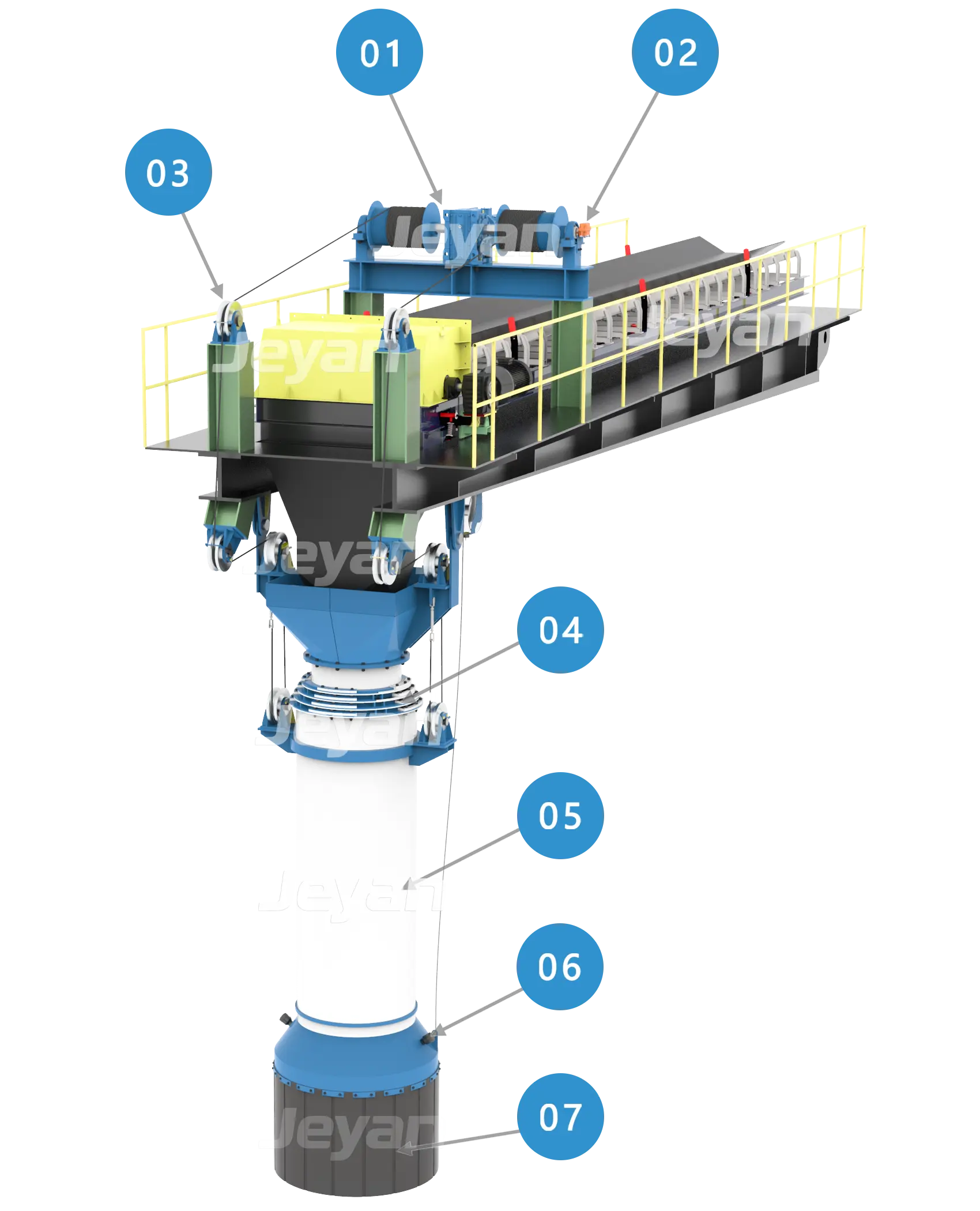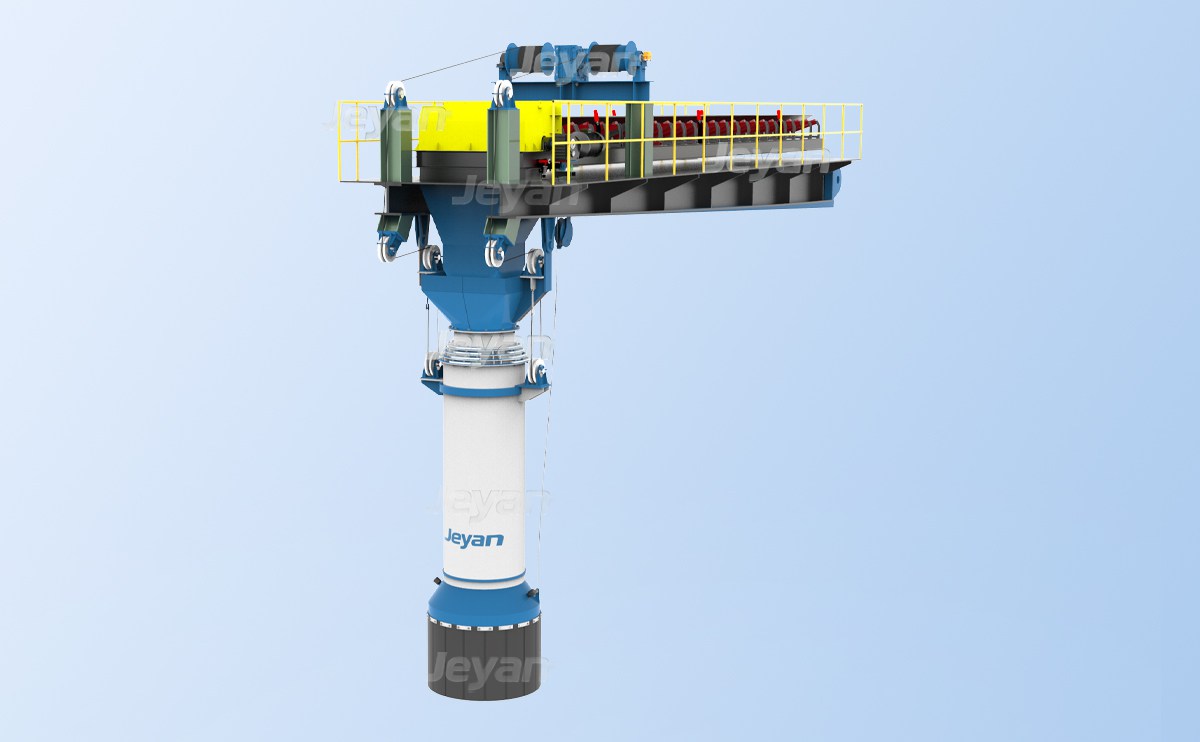
The TL series loading spout is engineered for bulk terminals and ship loading systems where equipment layout flexibility and maintenance accessibility are important considerations. By separating the winch system from the chute structure, the design allows better structural load distribution and provides easier access for inspection and maintenance compared with integrated arrangements.
With its heavy-duty straight inner tube construction, modular structural design, and automation options, the TL series provides a practical solution for large bulk material loading systems requiring reliable long-term operation.
The TL loading spout adopts a modular structural concept combining a separated lifting system, heavy-duty material conveying structure, and automation components. The independent winch arrangement allows greater flexibility in equipment positioning while maintaining stable telescopic operation and structural reliability in long travel applications.
The TL series combines proven heavy-duty mechanical design with a separated winch architecture developed for large ship loading projects. This design improves installation flexibility, simplifies maintenance access, and allows better adaptation to complex ship loader structures while maintaining long-term operational reliability.
The TL loading spout is designed for heavy-duty ship loading applications requiring long travel ranges and high capacity handling. With travel lengths up to 25 meters and large throughput capability, the TL series is suitable for demanding bulk terminal operations.
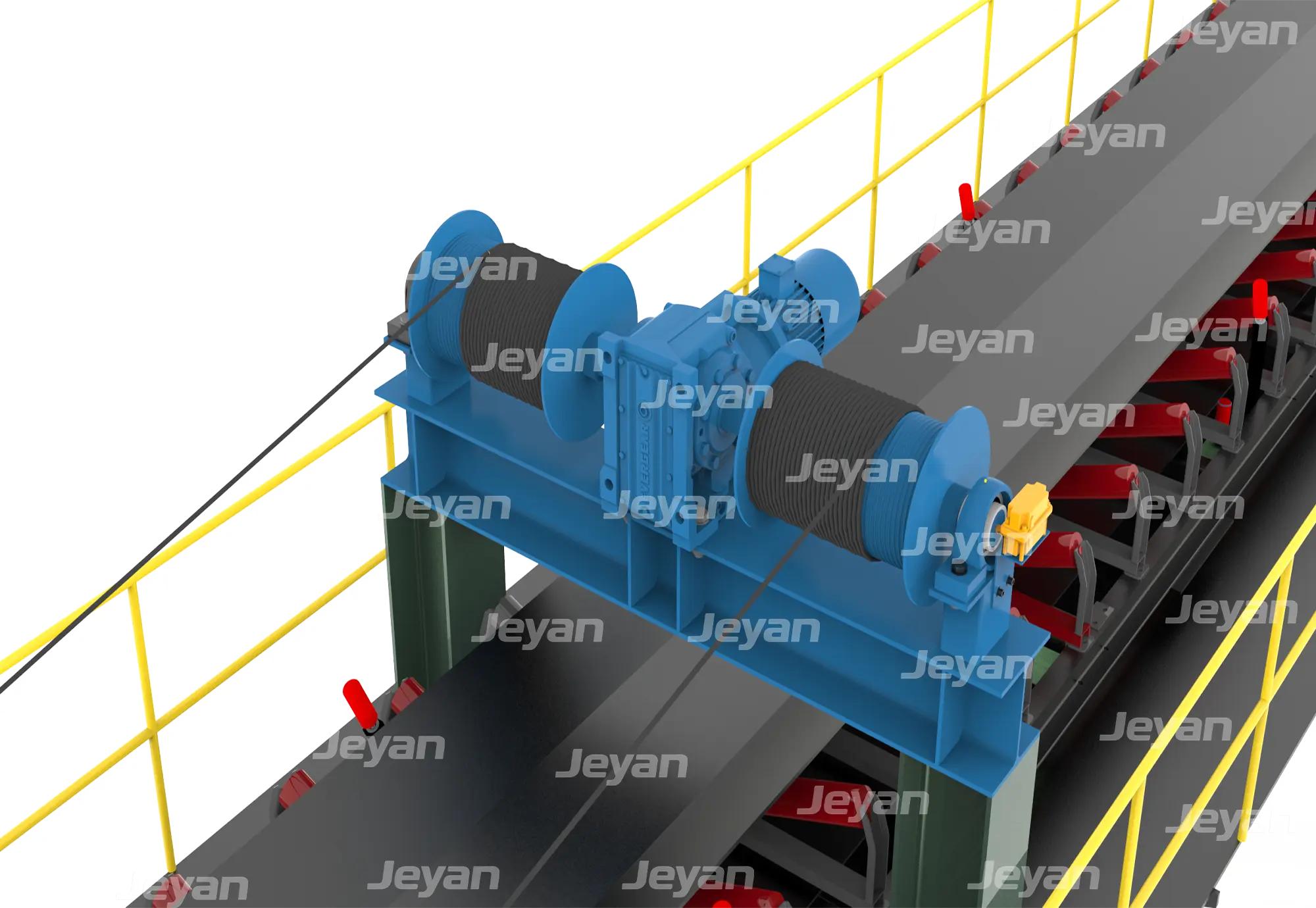
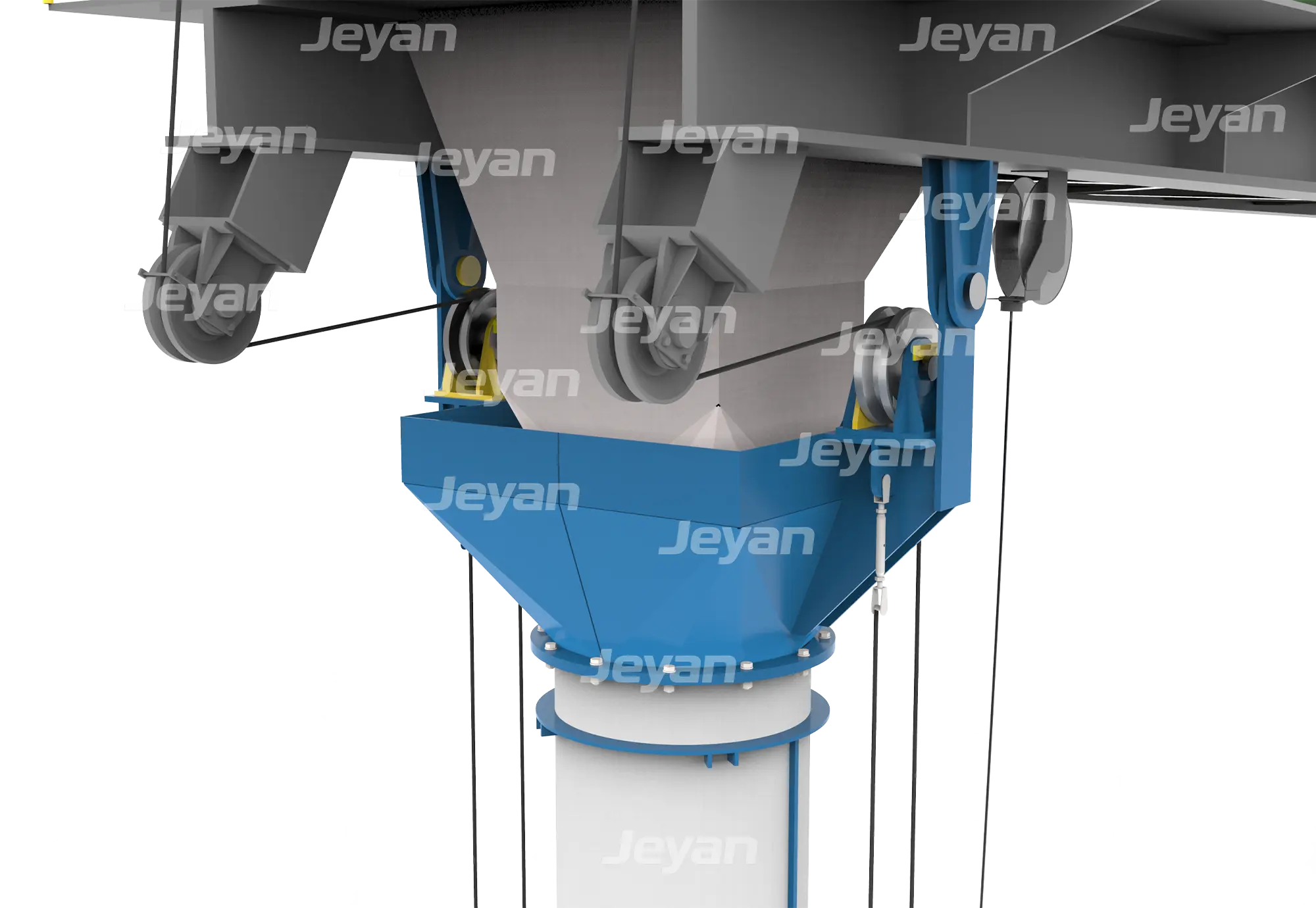
Unlike integrated designs, the TL series uses a separated winch system where the drive unit is installed independently from the spout body. This arrangement allows the winch system to be positioned above the conveyor structure or further away from the conveyor head, improving structural load distribution and providing easier access for maintenance. This design is particularly suitable for large ship loader installations.
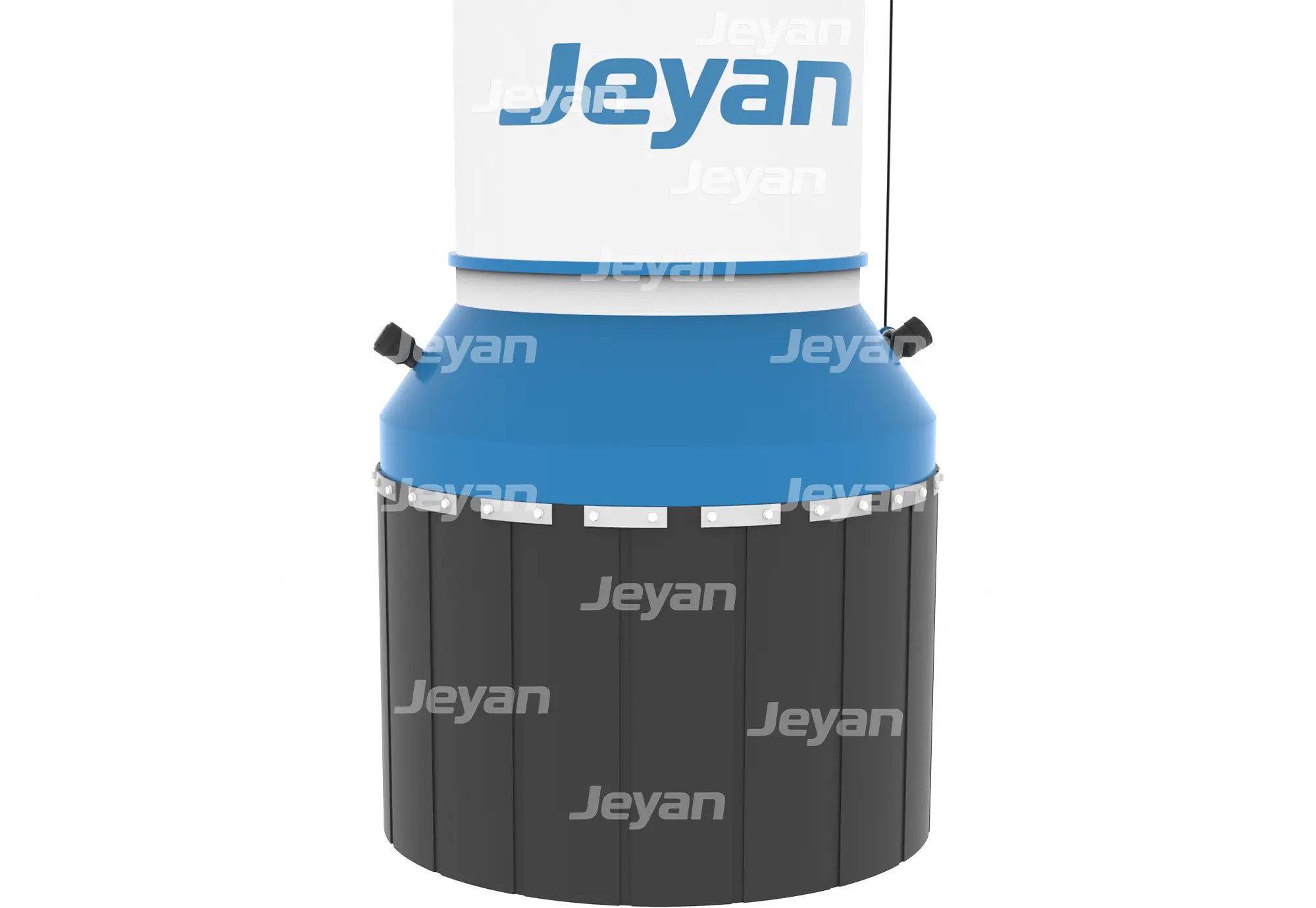
The TL series adopts a heavy-duty straight inner tube design suitable for large capacity and abrasive bulk materials. This design provides strong structural performance and durability for demanding industrial applications.
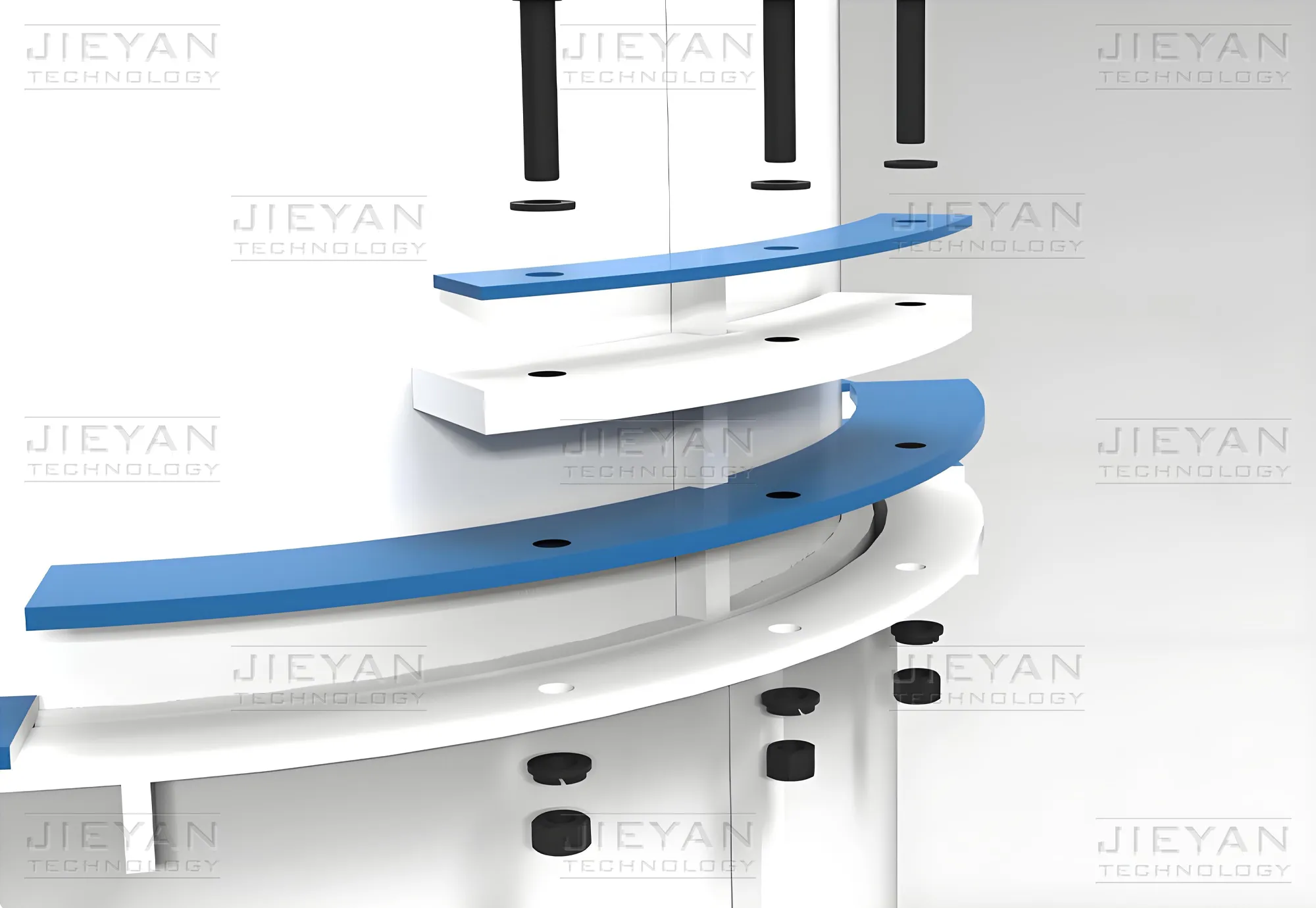
Inner tube sections are connected using modular flange connections for easier maintenance and replacement. UHMW polyethylene guide elements are installed between tube sections to reduce friction and prevent steel contact. These guide components ensure smooth extension and retraction even at long travel distances.
The TL loading spout is designed primarily for ship loading and large bulk material handling systems where dust control is typically managed through centralized dust collection systems. The spout structure supports integration with dust extraction systems where required.
Depending on project requirements, additional dust control measures can be incorporated as part of the overall system design.
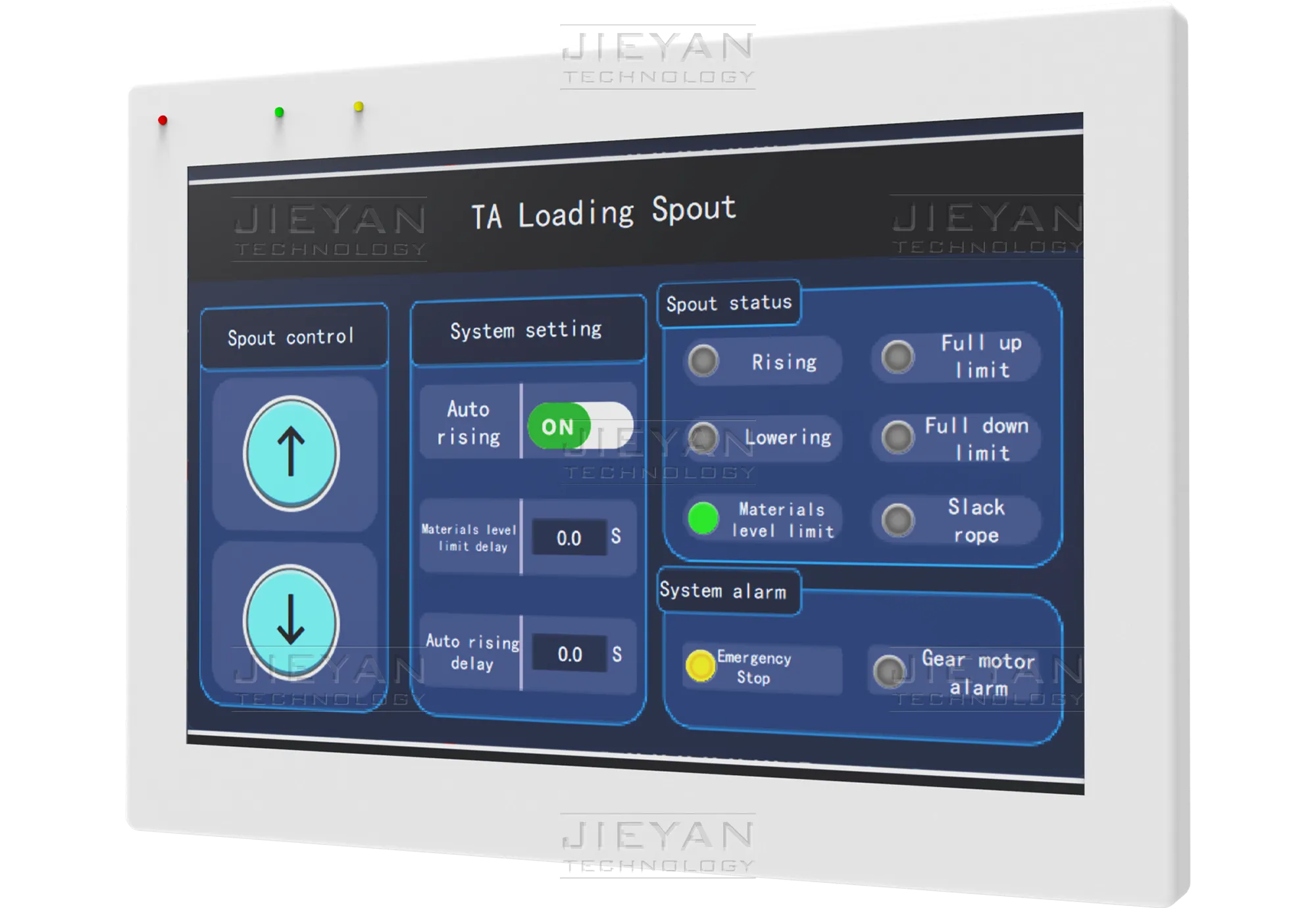
The TL loading spout integrates safety monitoring features such as upper and lower limit switches and slack rope detection to ensure safe operation. Optional level detection devices allow the spout to automatically lift when material reaches the preset level during ship loading.
PLC control and communication interfaces allow integration into terminal automation systems and remote operation platforms.
Each TL loading spout can be engineered according to project-specific ship loading requirements. Configurable items include inlet design, discharge arrangements, lifting configurations, and control systems.
The separated drive arrangement provides additional flexibility in equipment layout, allowing better integration into complex ship loader structures.
Critical components are manufactured using precision machining processes to ensure dimensional accuracy and stable operation. Surface protection systems such as galvanizing and industrial coatings provide corrosion resistance for marine and outdoor environments.
Structural components are designed for continuous heavy-duty operation while minimizing maintenance requirements, ensuring long equipment service life.
Optional configurations allow the equipment to be adapted to specific process requirements and operating conditions, improving reliability, durability and operational performance.
The TL series can be equipped with a pivoting inlet hopper designed for conveyors with luffing movement. The hopper consists of an upper fixed section and a lower pivoting section connected by hinge pins. This allows the loading spout to remain vertical regardless of conveyor angle, improving operational stability and reducing structural stress.
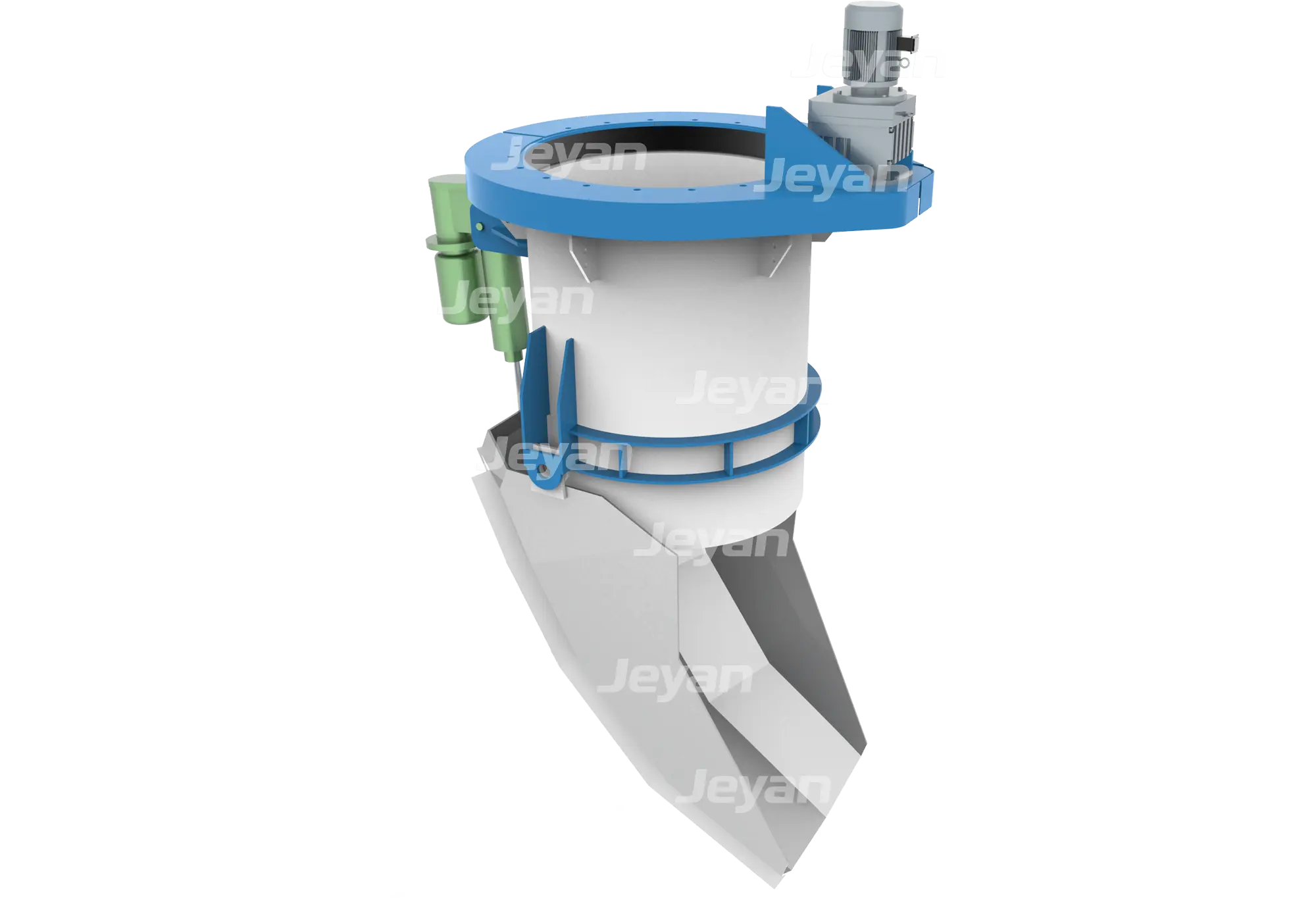
The TL series can be equipped with a rotary trimming spout consisting of a slewing bearing, drive unit, and rotating distributor head. This system enables 360° material distribution, allowing material to reach deeper and side areas of the ship hold, improving hold utilization and reducing ship loader repositioning frequency.
Typical technical data of standard models are shown below for reference and preliminary selection.
| Model | TL700 | TL800 | TL900 | TL1000 |
|---|---|---|---|---|
| Capacity | Up to 1800 t/h | Up to 2500 t/h | Up to 3,200 t/h | Up to 4000 t/h |
| Inlet size | Ø700 mm | Ø800 mm | Ø800mm | Ø1000 mm |
| Stroke range | 6,000–25,000 mm | 6,000–25,000 mm | 6,000–25,000 mm | 6,000–25,000 mm |
| Power | 7.5-15kw | 7.5-18.5kw | 7.5-22kw | 7.5-22kw |
* Capacity based on typical bulk density, data for reference only, final design prevails, dimensions subject to configuration.
Submit your project requirements and our engineers will recommend a suitable configuration for your application.
We have received your message and will contact you soon.
Common questions about application range, dust control, and selection data.
A: It is designed to load dry bulk materials from conveyors and other discharge points into ships, and is suitable for port loading, ore loading, mine yard use, mineral powder loading, and port bulk loading.
A: The original TL page states that the travel lengths are available from 3 meters up to 30 meters, depending on the configuration.
A: Please provide material type, loading point, required travel length, capacity, wear condition, dust control target, and any control or automation requirements.