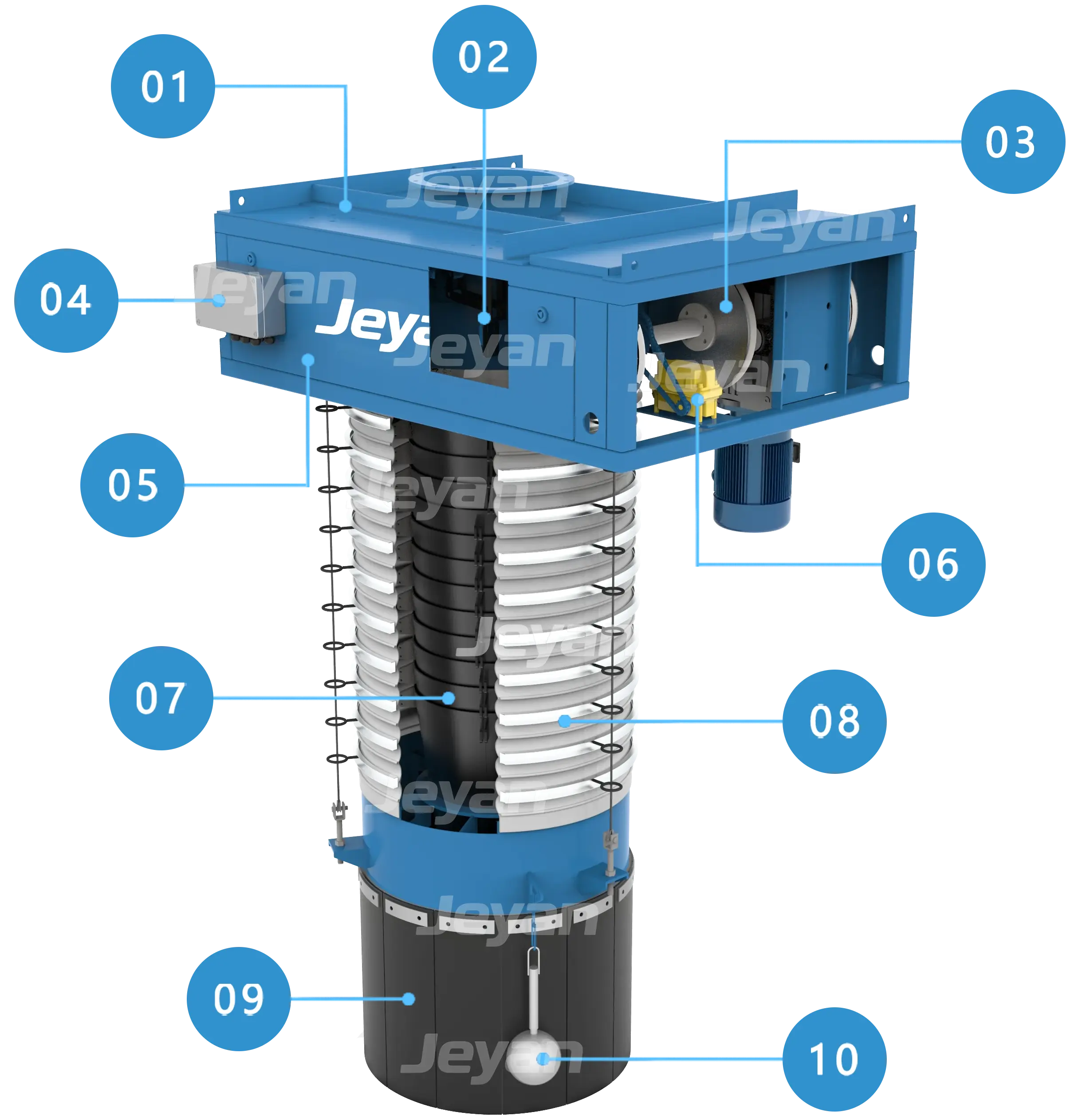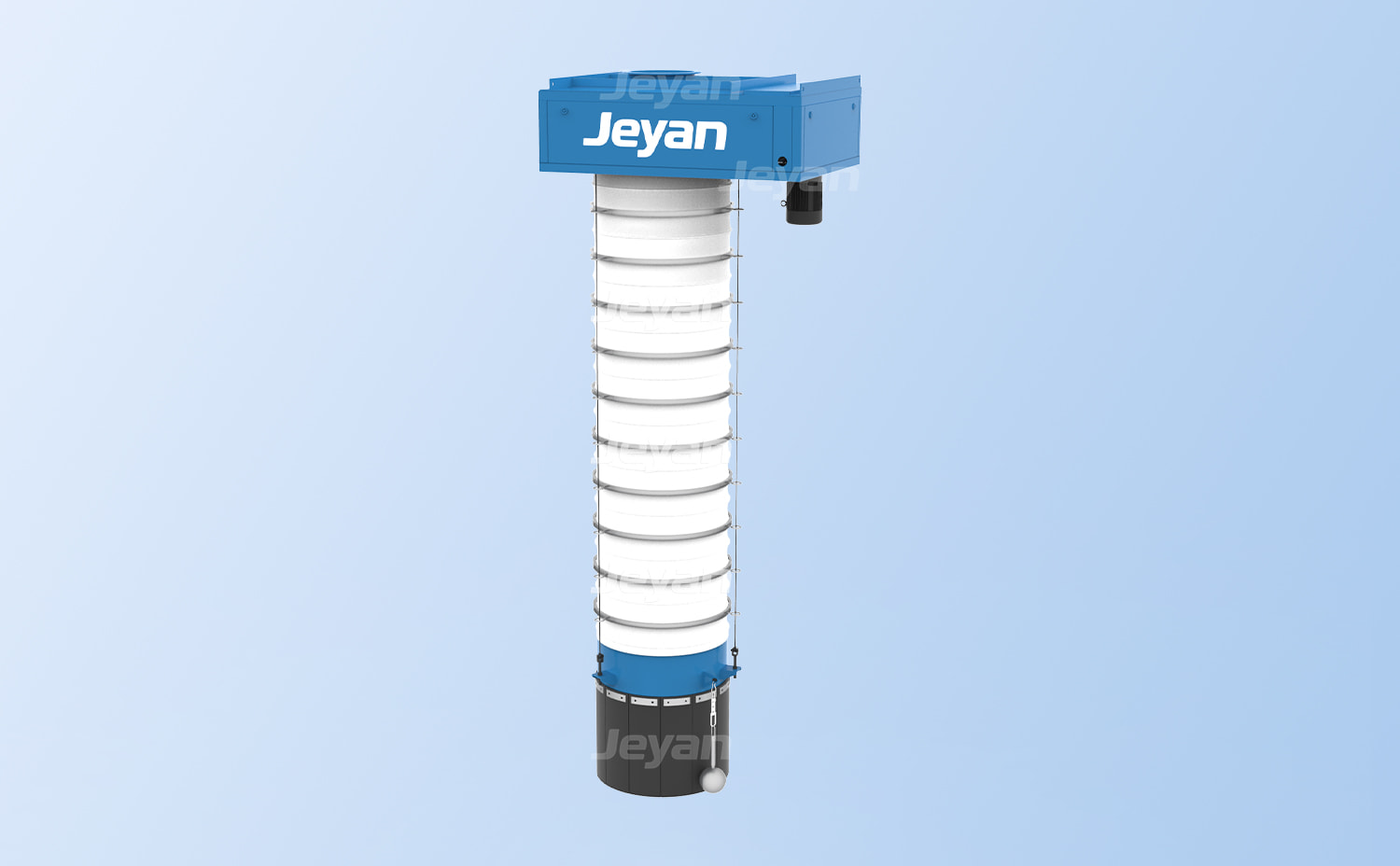
The TC series loading spout is engineered for bulk material transfer systems requiring large vertical travel and stable operation. The design focuses on structural stability, controlled material discharge, and practical integration with conveyors, ship loaders, and stockyard systems.
The TC loading spout is built around a modular structural design combining lifting, material flow, dust sealing, and control components. Each key assembly is engineered to ensure stable operation across long travel distances while maintaining reliable performance in continuous industrial service.
The TC series integrates proven mechanical design with practical engineering features developed from bulk material handling projects. These features focus on operational reliability, adaptability to different materials, and long-term durability in heavy industrial environments.
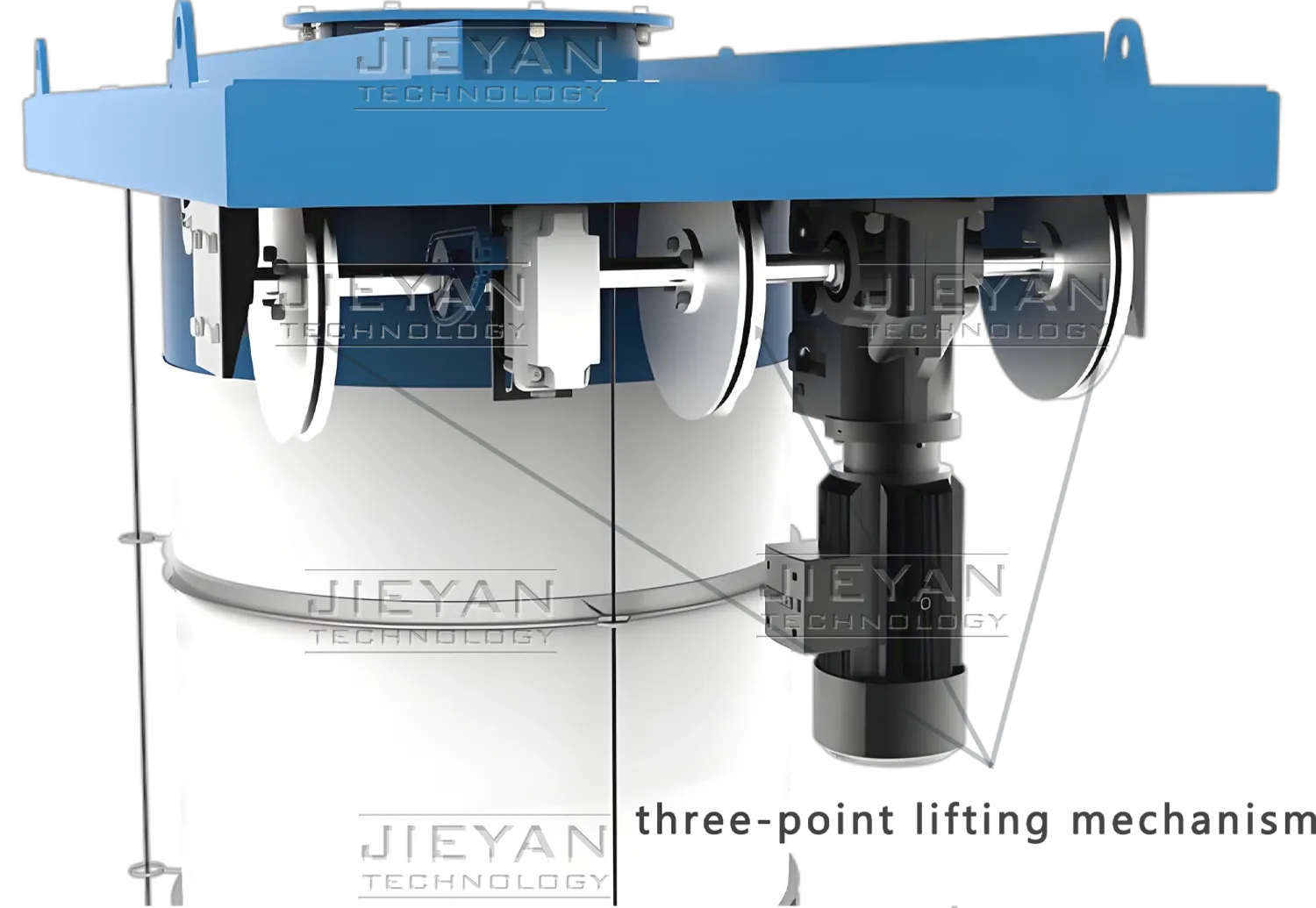
The TC loading spout is designed for long-travel applications such as stockpile loading and ship loading. It uses a heavy-duty triple-rope Winch arrangement combined with an industrial K-series gearbox to ensure stable movement even at extended working lengths. The multi-point lifting system distributes loads evenly along the structure and maintains stable operation during long vertical travel. Key rotating components are precision machined and heat treated to ensure smooth motion and extended wire rope service life. This design supports reliable operation for large material handling systems where long extension ranges are required.
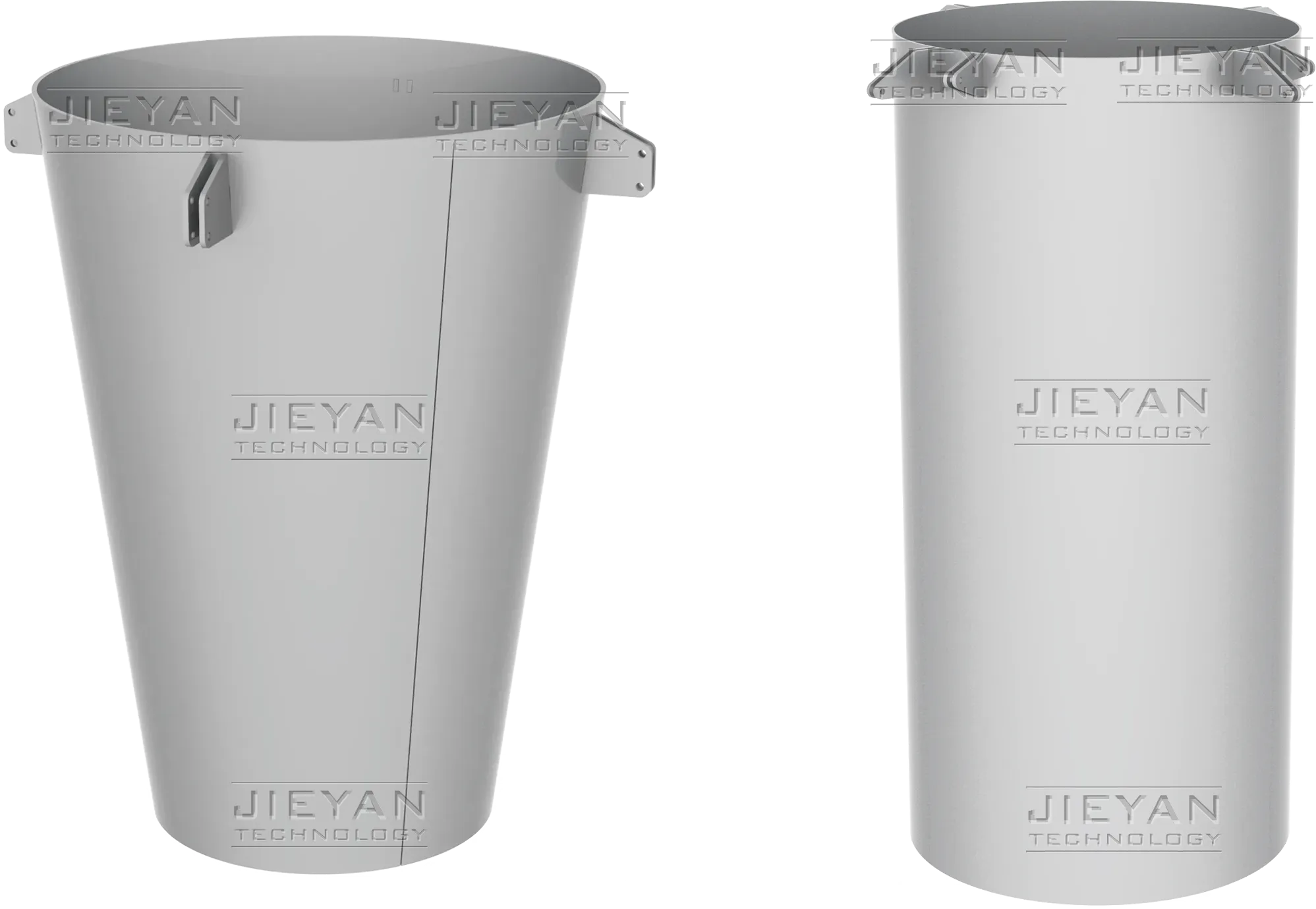
The TC series can be supplied with either conical inner tubes for improved material flow control and reduced dust, or straight inner tubes for abrasive materials and heavy-duty service. Both configurations are available in carbon steel, wear-resistant steel, wear plates, and stainless steel, with optional ceramic or UHMW liners. This flexibility allows the loading spout to handle a wide range of bulk materials including aggregates, minerals, grain, and other bulk commodities commonly handled in stockpile and ship loading operations.
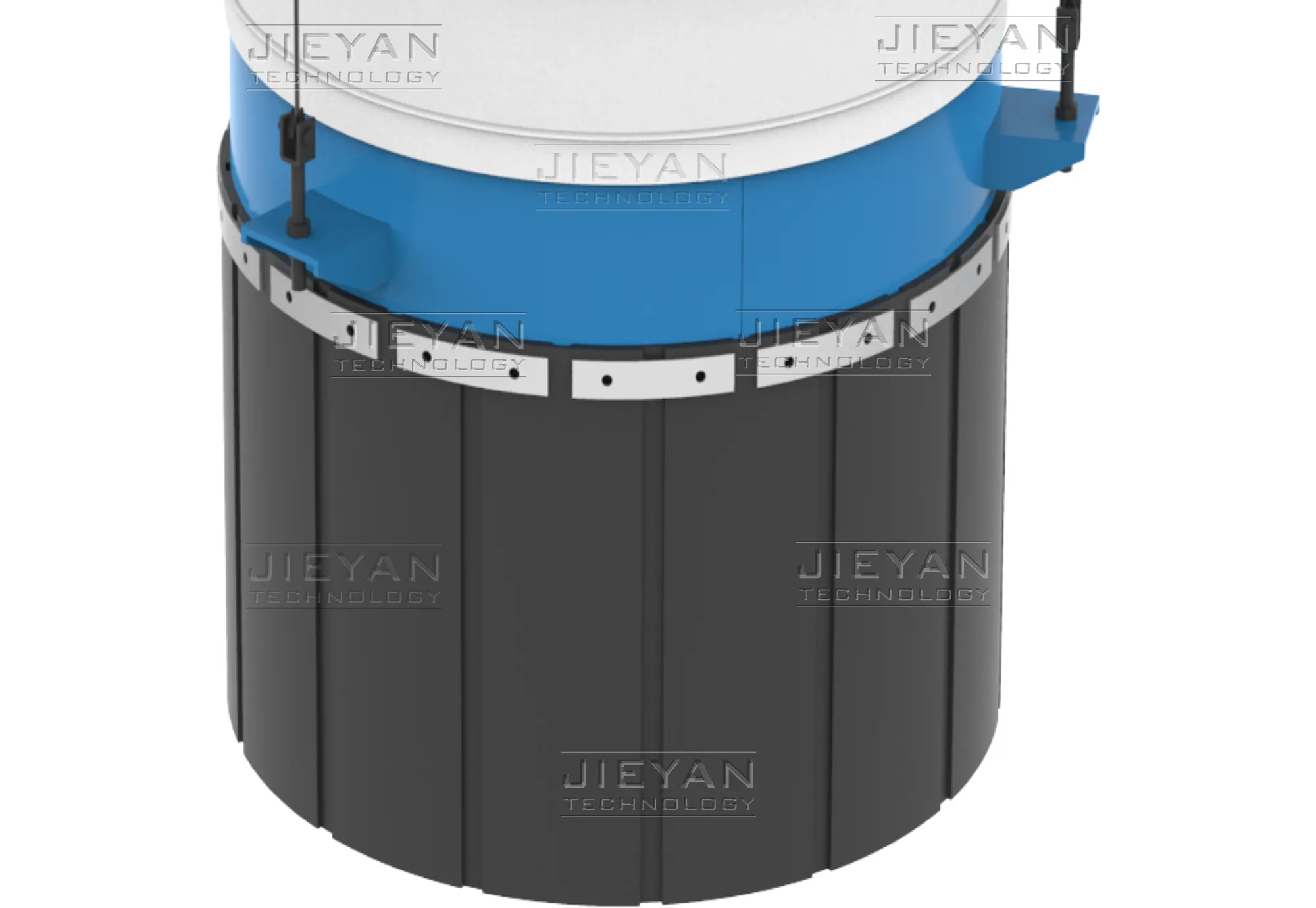
The TC loading spout features a double rubber skirt designed to maintain close contact with the material pile or loading surface, helping to minimize dust escape during stockpile formation or ship loading. The outer dust sleeve is available in durable materials such as polyester, nylon, Hypalon, and rubber to match different environmental and wear conditions. The reinforced sleeve construction ensures reliable sealing performance and long service life in outdoor bulk material handling environments.
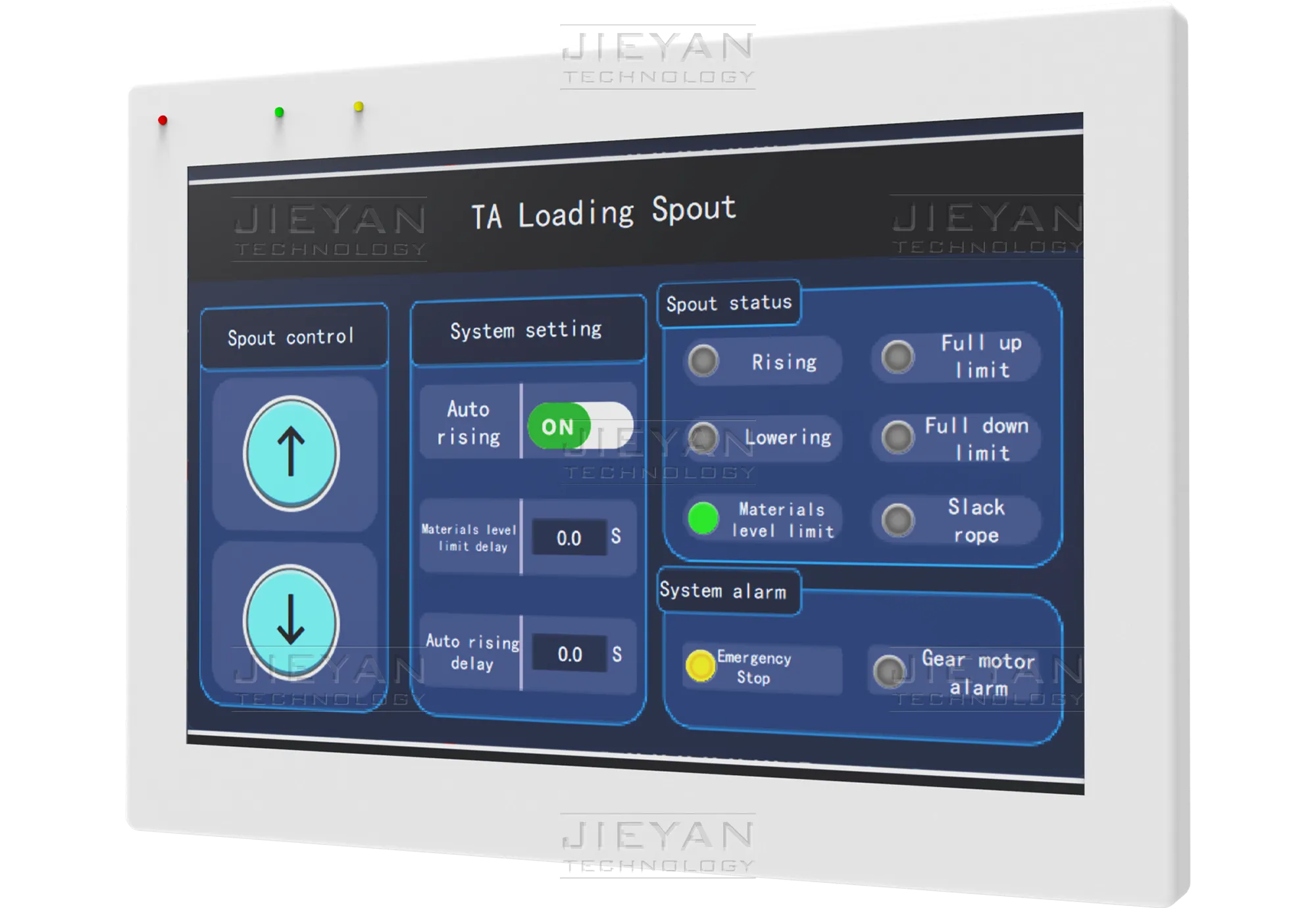
The TC loading spout integrates multiple automation and safety features to ensure safe operation in large material handling systems. Adjustable upper and lower limit switches and slack rope detection help prevent over-travel and rope derailment. With optional level sensors, the spout can automatically lift when the material reaches the preset level during stockpile formation or ship loading. PLC control, remote operation, and communication interfaces allow seamless integration into plant or terminal automation systems.
Each TC loading spout can be engineered according to project-specific requirements for stockpile or ship loading applications. Configurable features include inlet connections, discharge arrangements, dust extraction interfaces, lifting configurations, and control options. This flexibility allows the equipment to integrate smoothly into conveyor systems, ship loaders, or stockyard facilities. Our engineering approach focuses on practical solutions to ensure reliable performance under real operating conditions.
Critical components are manufactured using precision machining processes to ensure dimensional accuracy and smooth operation. Surface treatments such as galvanizing and industrial coating systems provide reliable corrosion protection for outdoor installations. Structural components are designed to withstand continuous industrial operation while maintaining stability across long extension ranges. These design features help reduce maintenance requirements and extend the overall equipment service life.
Optional configurations allow the equipment to be adapted to specific process requirements and operating conditions, improving reliability, durability and operational performance.
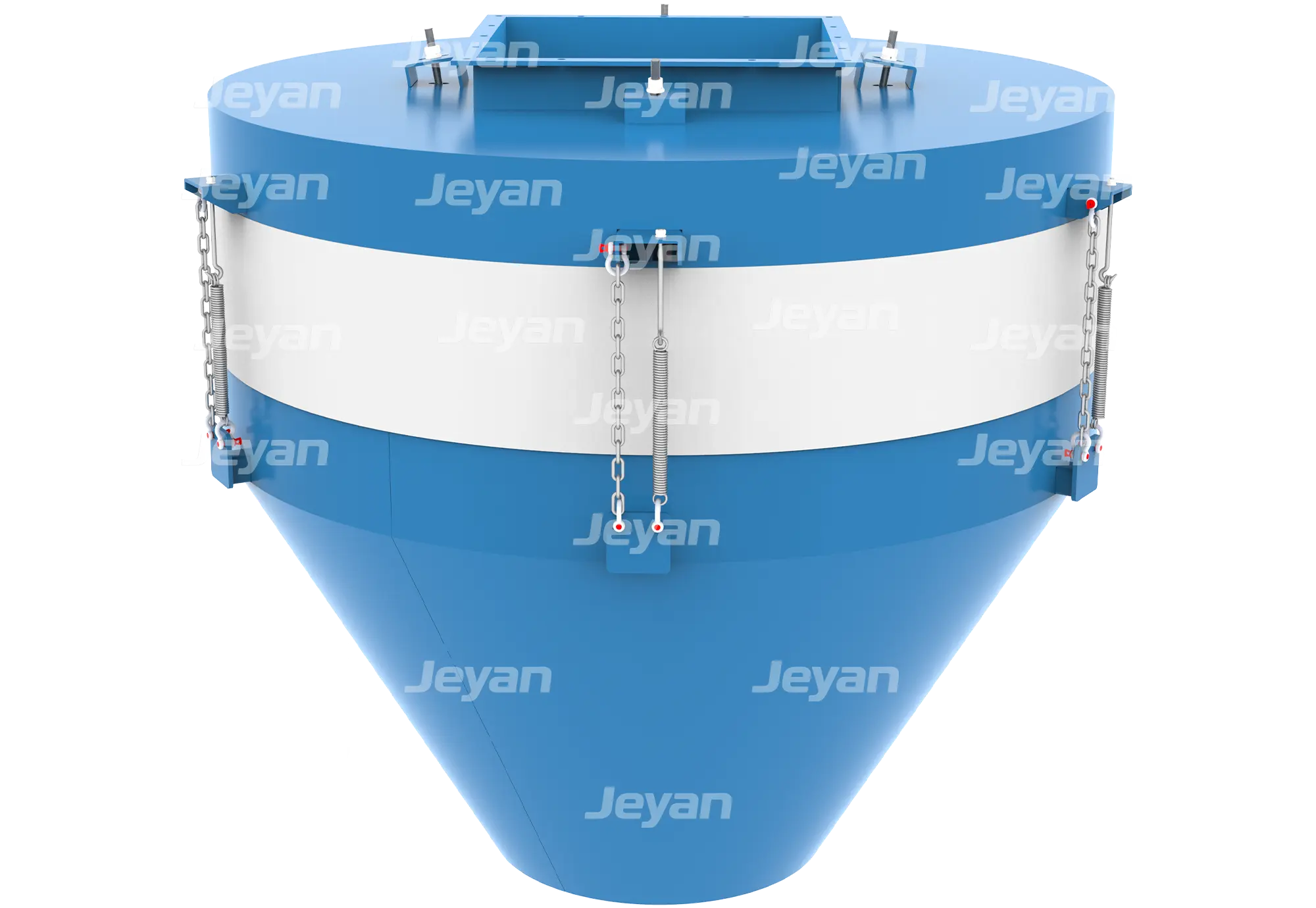
The TC series can be equipped with a dust suppression hopper installed at the outlet. The hopper includes an internal central cone to stabilize the material column, while the outer hopper is flexibly suspended by springs. This design forms a compact material column and reduces entrained air, minimizing dust generation at the source and improving dust suppression during ship loading or stockpiling.
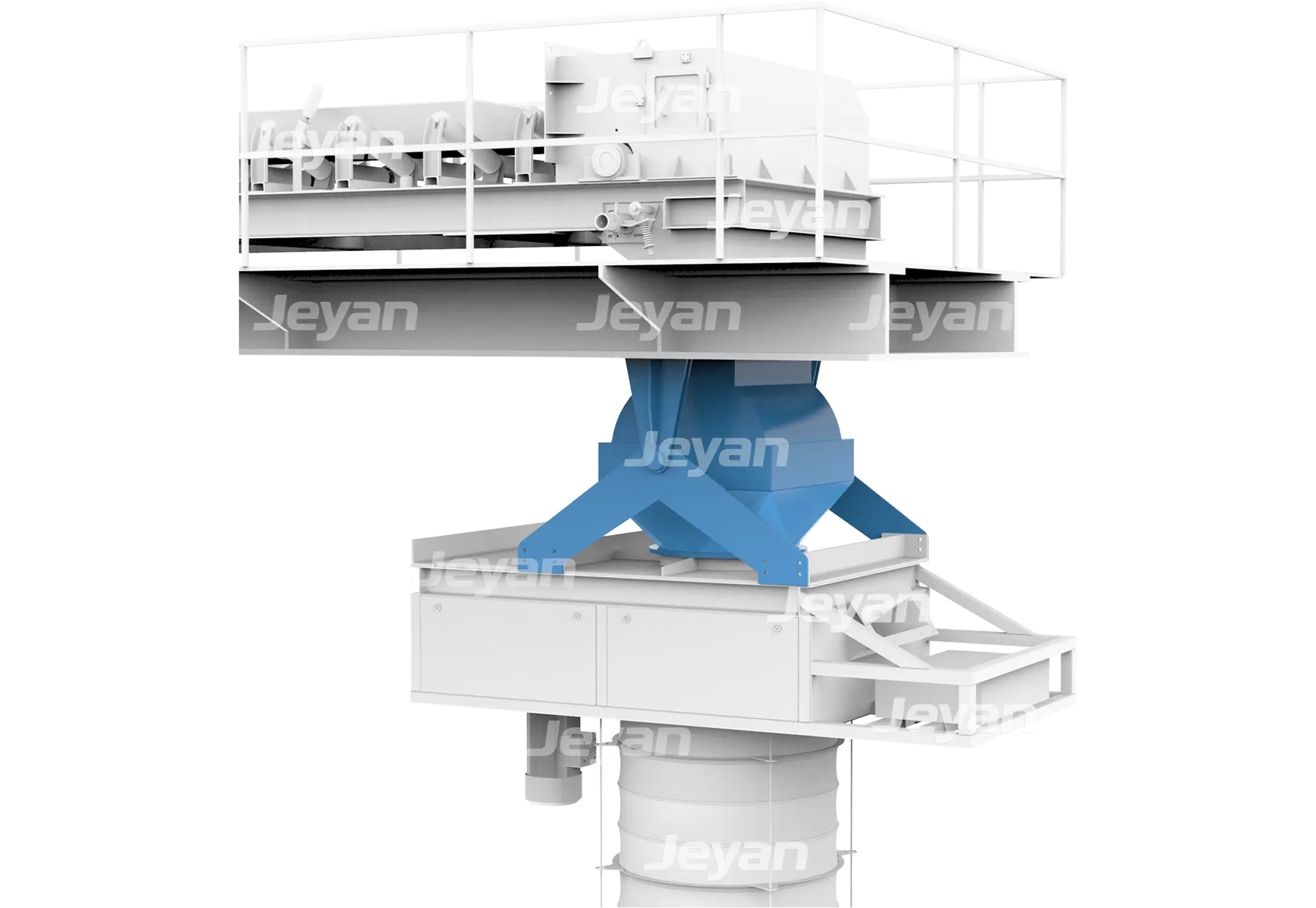
The TC series can be equipped with a pivoting inlet hopper designed for conveyors with luffing movement. The hopper consists of an upper fixed section and a lower pivoting section connected by hinge pins. This allows the loading spout to remain vertical regardless of conveyor angle, improving operational stability and reducing structural stress.
Typical technical data of standard models are shown below for reference and preliminary selection.
| Model | TC400 | TC500 | TC600 |
|---|---|---|---|
| Capacity | Up to 600 t/h | Up to 900 t/h | Up to 1,200 t/h |
| Inlet size | Ø400 mm / Ø450 mm | Ø500 mm / Ø550 mm | Ø600 mm / Ø650 mm |
| Stroke range | 4,000–20,000 mm | 4,000–20,000 mm | 4,000–20,000 mm |
| Power | 1.5-7.5kw | 2.2 -11kW | 3 -15kW |
* Capacity based on typical bulk density, data for reference only, final design prevails, dimensions subject to configuration.
Submit your project requirements and our engineers will recommend a suitable configuration for your application.
We have received your message and will contact you soon.
Common questions about application range, dust control, and selection data.
A: It is designed for dry bulk material loading into open trucks and rail cars, and can be configured for different wear and corrosion conditions through material and lining options.
A: The outlet uses a double-layer rubber dust skirt with automatic lifting to stay close to the material pile, and the spout also has a dust collection port for connection to an extraction system.
A: Please provide material type, capacity, loading point, truck or rail car type, wear/corrosion condition, dust control target, and any control or automation requirements.